Open Roth IRA online Your Essential Guide to Success
Open Roth IRA online brings a modern approach to retirement planning, allowing individuals to take charge of their financial futures with ease and accessibility. In today’s digital age, managing your investments and contributions has never been more straightforward, providing an excellent opportunity for both seasoned investors and novices alike. Understanding the intricacies of a Roth IRA, including its benefits and the essential steps to open one online, can empower you to make informed decisions for a secure retirement.
This guide will walk you through the fundamental concepts of Roth IRAs, the advantages of managing your account online, and the step-by-step process to set up your account with the right financial institution. With our comprehensive insights, you will be well-equipped to navigate the world of Roth IRAs effectively.

Understanding Roth IRA Basics: Open Roth IRA Online
A Roth Individual Retirement Account (IRA) is a unique retirement savings vehicle that allows individuals to contribute after-tax income, with the potential for tax-free growth and tax-free withdrawals in retirement. This account is characterized by its flexibility and favorable tax treatment, making it a popular choice for those planning for their financial future. The fundamental concepts of a Roth IRA hinge on the tax structure and the withdrawal rules associated with it.
Unlike traditional retirement accounts, where contributions are often tax-deductible, Roth IRA contributions are made with money that has already been taxed. This means that while you do not receive an immediate tax benefit, your investments grow tax-free, and qualified distributions made in retirement are also tax-free.
Differences Between Roth IRA and Other Retirement Accounts
Understanding the distinctions between a Roth IRA and other retirement accounts, such as traditional IRAs or 401(k) plans, is essential for effective financial planning. The main differences can be summarized as follows:
- Tax Treatment: Roth IRA contributions are made with after-tax dollars, while traditional IRAs allow pre-tax contributions, leading to taxable withdrawals in retirement.
- Withdrawal Rules: Roth IRAs permit tax-free withdrawals of contributions at any time, whereas traditional IRAs impose penalties for early withdrawals before age 59½.
- Required Minimum Distributions (RMDs): Roth IRAs do not require RMDs during the owner’s lifetime, while traditional IRAs mandate RMDs starting at age 73.
- Contribution Limits and Eligibility: Both Roth and traditional IRAs have contribution limits set by the IRS; however, Roth IRAs have income limits that can affect eligibility to contribute.
Eligibility Requirements for Opening a Roth IRA
To establish a Roth IRA, certain eligibility criteria must be met, primarily focused on income levels and filing status. These requirements are designed to ensure that the benefits of the account are reserved for individuals within specific income brackets. The primary eligibility requirements include:
- Income Limitations: For the tax year 2023, individuals can contribute the full amount to a Roth IRA if their modified adjusted gross income (MAGI) is below $138,000 ($218,000 for married couples filing jointly). Contributions begin to phase out above these income thresholds.
- Age Requirement: There is no minimum age to open a Roth IRA; however, contributors must have earned income to make contributions.
- Contribution Limits: For 2023, the contribution limit is $6,500 for individuals under age 50, and $7,500 for those aged 50 and above, which includes a catch-up contribution.
“Roth IRA contributions are made with after-tax dollars, leading to tax-free growth and withdrawals in retirement.”
Benefits of Opening a Roth IRA Online
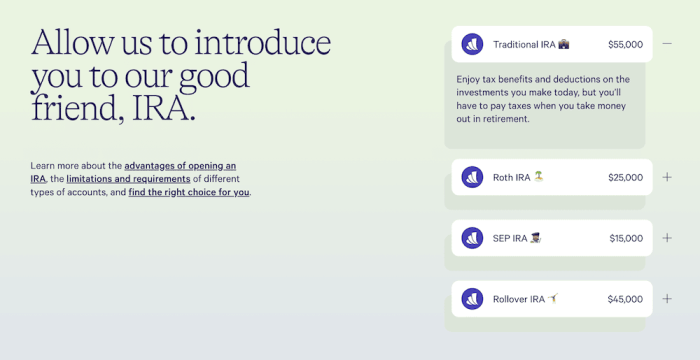
Opening a Roth IRA online presents several advantages that cater to modern investors seeking flexibility and efficiency in managing their retirement accounts. The convenience of digital platforms streamlines the process, making it accessible to a wider audience. By utilizing online services, individuals can take control of their retirement planning with ease, allowing for informed decision-making without the traditional constraints of in-person meetings or paper-based processes.The transition from traditional methods to online management of Roth IRAs offers numerous benefits.
Investors can conduct transactions and monitor their accounts at their convenience, reducing the time and effort required for account management. These online platforms often come equipped with advanced tools and resources that enhance the overall investment experience.
Key Features of Online Roth IRA Accounts
Understanding the specific features of online Roth IRA accounts can help potential investors appreciate the value of this method. The following are key attributes that make online Roth IRA accounts appealing:
- 24/7 Account Access: Investors can view and manage their Roth IRA accounts at any time, ensuring they stay informed and can make timely decisions.
- Real-Time Transactions: Online platforms allow for real-time buying and selling of investments, providing instant feedback on market conditions.
- Educational Resources: Many online providers offer articles, tutorials, and webinars that help investors understand investment strategies and market trends.
- Low Fees: Online Roth IRA accounts typically have lower fees compared to traditional financial institutions, allowing investors to retain more of their returns.
- Automated Contributions: Investors can set up automatic contributions to their accounts, ensuring consistent savings without the need for manual intervention.
- Diverse Investment Options: Online platforms often provide a wide range of investment choices, including stocks, bonds, ETFs, and mutual funds, allowing for a diversified portfolio.
The convenience factors associated with online applications significantly enhance the overall user experience. Investors no longer need to navigate complex paperwork or schedule appointments with financial advisors. The entire process, from opening an account to managing investments, can be completed in a matter of minutes using an internet-connected device. Additionally, many platforms offer user-friendly interfaces, making it easy for individuals of all experience levels to engage with their investments confidently.In summary, opening a Roth IRA online combines advanced technology with user convenience, paving the way for a more efficient approach to retirement planning.
The accessibility and features provided by online accounts empower investors to take charge of their financial futures with greater ease and confidence.
Step-by-Step Process to Open a Roth IRA Online

Opening a Roth IRA online is a straightforward process that can help you secure your financial future. Knowing the necessary steps and documentation can streamline the experience and lead to a successful application. Below is a comprehensive guide outlining the steps involved in opening a Roth IRA online.
Required Documents and Information for the Application
Before starting your application, it’s crucial to gather all necessary documents and information. This preparation ensures a smooth process and helps you avoid unnecessary delays. The following list Artikels the essential items needed:
- Personal Identification: A valid government-issued photo ID, such as a driver’s license or passport.
- Social Security Number: Your SSN is required for tax identification purposes.
- Contact Information: Your current address, phone number, and email address.
- Employment Information: Details about your employer, including name and address, and your job title.
- Bank Account Information: The account number and routing number for an external bank account to fund your Roth IRA.
Online Application Process
With all necessary documents in hand, you can begin the online application process. Here is a step-by-step walkthrough, using a hypothetical example for clarity.
1. Choose a Financial Institution
Select a reputable financial institution that offers Roth IRAs. For this example, let’s say you choose “ABC Investment Firm.”
2. Visit the Official Website
Navigate to the ABC Investment Firm’s website and locate their Roth IRA section. Here, you will find detailed information about their services.
Many individuals from non-business backgrounds are increasingly drawn to pursuing an MBA, as it can significantly enhance their career prospects. The curriculum often accommodates various disciplines, making it accessible and beneficial for those who have not studied business previously. For further information on this topic, visit our resource on MBA for non-business majors.
3. Start the Application
Click on the “Open a Roth IRA” button. This action will redirect you to the online application form.
4. Fill Out Personal Information
Enter your personal information as required. For instance, if your name is Jane Doe, enter this along with your SSN and contact details.
5. Provide Employment Details
Include your employment information. If Jane works at “XYZ Corporation,” she would input the company name, her title, and address.
6. Select Investment Options
Choose your investment preferences. For example, Jane decides to invest in mutual funds and ETFs as part of her Roth IRA.
7. Fund Your Account
Input your bank account details to fund the Roth IRA. Jane enters her checking account number and the routing number from her bank.
8. Review and Submit
Carefully review all entered information for accuracy. After confirming everything is correct, submit the application.
When considering advanced education options, potential MBA candidates often debate between the GMAT and GRE. Understanding the differences in their structure and focus can be crucial, especially when deciding which test aligns better with your strengths. For more detailed insights, you can explore the article on GMAT vs GRE for MBA.
9. Confirmation and Setup
Upon submission, you will receive a confirmation email. For Jane, this email confirms her application and provides details on her next steps for account setup.1
0. Monitor Your Account
Once your account is established, log in to monitor contributions and investment performance regularly.Opening a Roth IRA online is not only efficient but also empowers you to take control of your retirement savings. By following this structured approach, you can ensure a successful application process tailored to your financial goals.
Selecting the Right Financial Institution

Choosing the right financial institution for your online Roth IRA is a crucial decision that can significantly impact your investment journey. With numerous options available, it is essential to evaluate various factors that can influence your retirement savings strategy. This section will guide you through the key considerations when selecting a provider for your Roth IRA.
Comparison of Financial Institutions
When comparing different financial institutions offering online Roth IRAs, it is essential to consider the range of services and features available. Each institution may offer unique advantages that align with your financial goals. Evaluating these options can help you make an informed decision. Here are the key criteria to consider:
- Reputation and Trustworthiness: Look for institutions with strong customer reviews and ratings. A reliable provider should have a solid track record in managing retirement accounts.
- Account Minimums: Some financial institutions require minimum deposits to open a Roth IRA, while others may not have any minimum requirements. Choose one that fits your financial situation.
- Customer Service: Quality customer service is vital; assess whether the institution offers readily available support through various channels, including phone, email, or live chat.
- Technology and User Experience: A user-friendly online platform enhances the account management experience, making it easier to track investments and execute trades.
- Investment Options: Ensure that the financial institution provides a diverse selection of investment options, including stocks, bonds, mutual funds, and ETFs, allowing you to build a balanced portfolio.
Importance of Fees and Investment Options
Fees can significantly affect the overall returns of your Roth IRA over time. It is imperative to understand the fee structure of each provider as it can vary widely. Common fees associated with Roth IRAs include account maintenance fees, trading fees, and fund expense ratios. Lower fees can lead to higher net returns, especially in a long-term investment scenario.
“Lower fees can enhance your investment returns, making it crucial to understand the fee structure of your chosen financial institution.”
In addition to fees, a robust selection of investment options is essential. A diverse array of investments allows you to tailor your portfolio to your risk tolerance and financial goals. Review the following aspects related to investment options:
- Variety of Investments: Look for a provider offering a wide range of mutual funds, index funds, stocks, and bonds. This variety enables you to diversify your investments.
- Access to Research and Tools: Quality financial institutions often provide research tools and educational resources to help you make informed investment decisions.
- Portfolio Management Options: Some institutions offer automated portfolio management services, which can be beneficial for investors seeking a hands-off approach.
Funding Your Roth IRA
Funding your Roth IRA is a crucial step in ensuring your retirement savings grow effectively. Understanding the various methods of contribution, the contribution limits, and strategies for optimizing your funding can significantly impact your financial future. This section Artikels the different avenues available for contributing to your Roth IRA, as well as essential strategies to maximize your contributions within the IRS guidelines.
Methods of Contributing to a Roth IRA
There are several efficient ways to fund your Roth IRA online, providing flexibility and convenience for investors. Each method has its unique advantages depending on your financial situation and preferences.
- Direct Transfer from a Bank Account: One of the easiest methods is to set up a direct transfer from your checking or savings account to your Roth IRA. This can often be scheduled as recurring contributions, ensuring consistency in your savings strategy.
- Wire Transfers: For those looking to make larger contributions, wire transfers can be used to fund your Roth IRA. This method is quick but may incur fees, so it’s essential to verify with your financial institution.
- Rollovers from Other Retirement Accounts: If you have other retirement accounts, such as a 401(k), you may be eligible to roll over funds into a Roth IRA. However, it’s crucial to understand the tax implications of such actions.
- Check Contributions: You can also contribute via check. Once your check is processed, the funds will be deposited into your Roth IRA.
Contribution Limits for Roth IRAs
The IRS sets annual contribution limits for Roth IRAs, which are important to adhere to in order to avoid penalties. For 2023, the maximum contribution limit is $6,500 for individuals under 50 years of age and $7,500 for those aged 50 and above.
“Contributing beyond the IRS limits may result in penalties, so it is essential to stay within these guidelines.”
Understanding how these limits work is vital for effective retirement planning. The contribution limits can be affected by your filing status and modified adjusted gross income (MAGI). For instance, individuals with a MAGI above certain thresholds may be subjected to a reduction in the maximum contribution amount.
Strategies for Optimizing Funding
To maximize the benefits of your Roth IRA, consider implementing the following strategies within the allowed contribution limits:
- Start Early: The earlier you begin contributing, the more time your investments have to grow. Take advantage of compound interest over time, which can significantly increase your retirement savings.
- Make Catch-up Contributions: If you are aged 50 or older, ensure that you take advantage of the catch-up contribution option, allowing for an additional $1,000 in contributions.
- Utilize Automatic Contributions: Setting up automatic contributions can help ensure that you consistently meet your funding goals without needing to remember to make manual transfers.
- Consider Spousal Contributions: If one spouse does not have earned income, the other spouse can contribute to a Roth IRA for them, effectively doubling the funding potential for retirement savings.
By adopting these strategies and being aware of the various funding methods, you can effectively enhance your Roth IRA contributions and secure a more stable financial future.
Investment Options within a Roth IRA
A Roth IRA offers a diverse range of investment options, allowing account holders to tailor their portfolios to align with their financial goals and risk tolerance. Understanding these options is crucial for maximizing the potential returns on retirement savings while taking advantage of the tax benefits associated with this type of account. Investment choices within a Roth IRA typically include stocks, bonds, mutual funds, exchange-traded funds (ETFs), real estate, and other alternative investments.
Each type of investment comes with its own set of risks and rewards, making it essential for investors to comprehend how these factors can influence their overall financial strategy.
Types of Investments Available in a Roth IRA
The following categories of investments are commonly available within a Roth IRA, each with unique characteristics impacting their performance:
| Investment Type | Potential Risks | Potential Rewards |
|---|---|---|
| Stocks | High volatility, loss of principal | High long-term growth potential |
| Bonds | Interest rate risk, credit risk | Stable income and lower volatility |
| Mutual Funds | Management fees, market risk | Diversification and professional management |
| ETFs | Market risk, trading costs | Liquidity and low expense ratios |
| Real Estate | Illiquidity, property market fluctuations | Potential rental income and appreciation |
| Alternative Investments | Higher fees, less regulation | Potential for high returns, diversification |
Investors should be aware of the importance of diversification in their Roth IRA portfolios. Diversification involves spreading investments across various asset classes to mitigate risks. By holding a mix of stocks, bonds, and other investments, individuals can reduce the impact of any single asset’s poor performance on their overall portfolio. This strategy can help create a more stable investment experience over the long term, aligning with the goal of growing wealth for retirement.
“Diversification is not just a strategy; it’s a fundamental principle for reducing risk and enhancing potential returns.”
Managing Your Roth IRA Online
Managing a Roth IRA online provides investors with the flexibility and resources needed to oversee their retirement savings effectively. By utilizing digital platforms, individuals can easily track their investments, make necessary adjustments, and access valuable tools that enhance their financial decision-making. Familiarity with these features not only promotes efficient management but also fosters a proactive approach to retirement planning.Online platforms typically offer a variety of tools and resources designed to assist investors in managing their Roth IRA accounts.
These resources may include comprehensive dashboards that display account balances, transaction histories, and performance metrics. In addition, many institutions provide educational materials and market analysis reports that help individuals stay informed about their investment options and market trends.
Investment Performance Monitoring Tools
Monitoring the performance of investments within a Roth IRA is crucial for ensuring that financial goals are met. Most online financial institutions offer a suite of monitoring tools that enhance the ability to track investment performance in real time. These tools often feature:
- Portfolio Performance Trackers: These tools allow users to view the overall performance of their investment portfolio, including gains, losses, and asset allocation percentages.
- Market News and Alerts: Subscribers can receive alerts on significant market movements or news related to specific investments, enabling them to make informed decisions promptly.
- Historical Performance Charts: Visualization of past performance helps investors assess trends and adjust strategies accordingly.
By routinely reviewing these metrics, investors can stay aligned with their long-term retirement objectives and make informed decisions based on market conditions.
Adjusting Investment Strategies Online
The ability to make adjustments to an investment strategy online is a key aspect of managing a Roth IRA. Most platforms facilitate this process through user-friendly interfaces that allow for seamless modifications. Key aspects include:
- Rebalancing Options: Investors can easily realign their asset allocation to maintain their desired risk profile by buying or selling specific investments based on performance and market trends.
- Adding or Removing Investments: Users can diversify their portfolios by adding new investment options or removing underperforming assets with just a few clicks.
- Setting Up Automatic Contributions: Many platforms allow investors to automate their contributions to ensure consistent growth over time, enhancing long-term savings potential.
Through these functionalities, investors can ensure their Roth IRA remains aligned with their evolving financial goals and market conditions.
“Proactive management of your Roth IRA can significantly enhance your financial security and help you achieve a comfortable retirement.”
Common Mistakes to Avoid
Opening and managing a Roth IRA online can be a straightforward process, yet many individuals fall into common pitfalls that can hinder their financial goals. Understanding these potential missteps is crucial for maximizing the benefits of this retirement account. This section highlights typical errors encountered during the application and funding processes, along with strategies to mitigate these issues.
Common Pitfalls in Opening and Managing a Roth IRA
Recognizing common mistakes is vital for effective Roth IRA management. Here are some prevalent errors that individuals should avoid:
- Incorrect Income Reporting: Failing to accurately report modified adjusted gross income (MAGI) can lead to ineligibility for contributions. It’s essential to understand the income limits and their implications.
- Missing Contribution Deadlines: Contributions must be made by tax filing deadlines. Missing these dates can result in the inability to contribute for that tax year, diminishing retirement savings.
- Over-Contributing: Exceeding contribution limits can incur penalties. Staying informed about annual limits is necessary to avoid such issues.
- Poor Investment Choices: Selecting high-fee or low-performing investments can erode returns. Researching investment options within the Roth IRA is critical for long-term growth.
- Neglecting to Rebalance: Failing to periodically review and adjust the investment portfolio can lead to misalignment with retirement objectives and risk tolerance.
Strategies to Prevent Mistakes in the Application and Funding Process
Implementing effective strategies can significantly reduce the likelihood of errors during the application and funding stages of a Roth IRA. Consider the following approaches:
- Document Review: Thoroughly review all application documentation and financial information before submission to minimize errors.
- Set Reminders: Establish calendar alerts for important deadlines, such as contribution limits and filing dates, to ensure timely actions.
- Maintain Accurate Records: Keep detailed records of contributions, earnings, and withdrawals to facilitate accurate reporting and compliance with IRS regulations.
- Consult Financial Advisors: Engaging with a financial advisor can provide insights into investment strategies and ensure that contributions align with long-term goals.
Potential Tax Implications of Mismanagement
Mismanagement of a Roth IRA can lead to significant tax consequences, which may include:
- Withdrawal Penalties: Withdrawals that do not meet the qualified distribution criteria may incur taxes and penalties, particularly if the account is less than five years old.
- Excess Contribution Penalties: Contributions exceeding the annual limit can incur a 6% penalty per year for each year the excess remains in the account.
- Tax on Earnings: Earnings from a Roth IRA can become taxable if the account is not managed correctly, specifically through non-qualified distributions.
“Understanding and avoiding common mistakes with a Roth IRA can safeguard your retirement savings and ensure compliance with IRS regulations.”
Resources for Further Learning
Understanding the nuances of a Roth IRA can significantly enhance your retirement planning strategy. To deepen your knowledge and stay informed about the latest developments surrounding Roth IRAs, it is beneficial to explore various reputable resources. The following sections compile a selection of helpful websites, articles, literature, and community forums designed to support your journey in retirement planning.
Reputable Websites and Articles
A variety of trustworthy online resources provide comprehensive information regarding Roth IRAs, including tax implications, contribution limits, and investment strategies. These platforms are known for their reliability and up-to-date content.
- IRS.gov: The official Internal Revenue Service website offers detailed guidelines and the latest updates on Roth IRAs, including eligibility and tax benefits.
- Investopedia: This financial education platform provides articles and tutorials explaining Roth IRAs, investment choices, and common pitfalls to avoid in retirement planning.
- NerdWallet: Known for its user-friendly content, NerdWallet features articles that break down the intricacies of Roth IRAs, comparison tools for financial institutions, and tips for maximizing retirement savings.
- Fidelity Investments: Fidelity’s website includes educational resources, calculators, and articles that help investors understand how to effectively utilize their Roth IRAs.
Books and Online Courses, Open Roth IRA online
For those seeking a more structured approach to learning about retirement planning and Roth IRAs, numerous books and online courses can provide valuable insights and strategies. These resources can help you build a solid knowledge foundation.
- “The Bogleheads’ Guide to Retirement Planning” by Taylor Larimore et al.: This book focuses on practical strategies for retirement planning, including detailed discussions on tax-advantaged accounts like Roth IRAs.
- “Retire Inspired: It’s Not an Age, It’s a Financial Number” by Chris Hogan: This book encourages readers to think about their retirement goals and provides actionable steps to achieve financial independence, including the use of Roth IRAs.
- Coursera: Offers online courses such as “Personal Finance” which cover retirement planning basics and the role of various investment vehicles, including Roth IRAs.
- edX: Features finance courses from accredited institutions that delve into retirement strategies and the use of tax-efficient accounts.
Community Forums and Support Groups
Engaging with community forums and support groups can provide additional perspectives, answers to specific questions, and shared experiences from fellow investors. These platforms foster a sense of community among individuals investing in Roth IRAs.
- Bogleheads Forum: A supportive online community where investors discuss various topics related to personal finance and retirement planning, including Roth IRAs.
- Reddit – r/personalfinance: This forum allows users to share their experiences, seek advice, and discuss strategies for retirement, including the utilization of Roth IRAs.
- Facebook Groups: Joining groups focused on personal finance and retirement planning can offer insights and real-life experiences from peers who are on a similar path.
- Meetup Groups: Look for local groups focused on personal finance or retirement planning, where you can network and learn from others in your area.
Final Conclusion
In conclusion, Open Roth IRA online is not only a viable option for retirement savings but also a smart choice for those looking to manage their investments conveniently. By understanding the key aspects of Roth IRAs, from eligibility requirements to investment options, you can make strategic decisions that align with your financial goals. Embrace the advantages of online management and take a proactive step toward building a secure financial future.
Question Bank
What are the eligibility requirements for a Roth IRA?
To be eligible for a Roth IRA, you must have earned income and meet certain income limits. These limits can vary based on your tax filing status.
Can I open a Roth IRA if I already have a traditional IRA?
Yes, you can have both a traditional IRA and a Roth IRA. However, your total contributions to both accounts cannot exceed the annual contribution limits.
What happens if I exceed the contribution limit?
Exceeding the contribution limit may result in a 6% excess contribution penalty each year until the excess is corrected.
Are there penalties for withdrawing contributions from a Roth IRA?
No, you can withdraw your contributions at any time without penalties or taxes, as long as you keep track of your contributions.
Can I convert an existing traditional IRA to a Roth IRA?
Yes, you can convert a traditional IRA to a Roth IRA, but you will need to pay taxes on the amount converted in the year of the conversion.